
Content warning: This story discusses child sexual abuse.
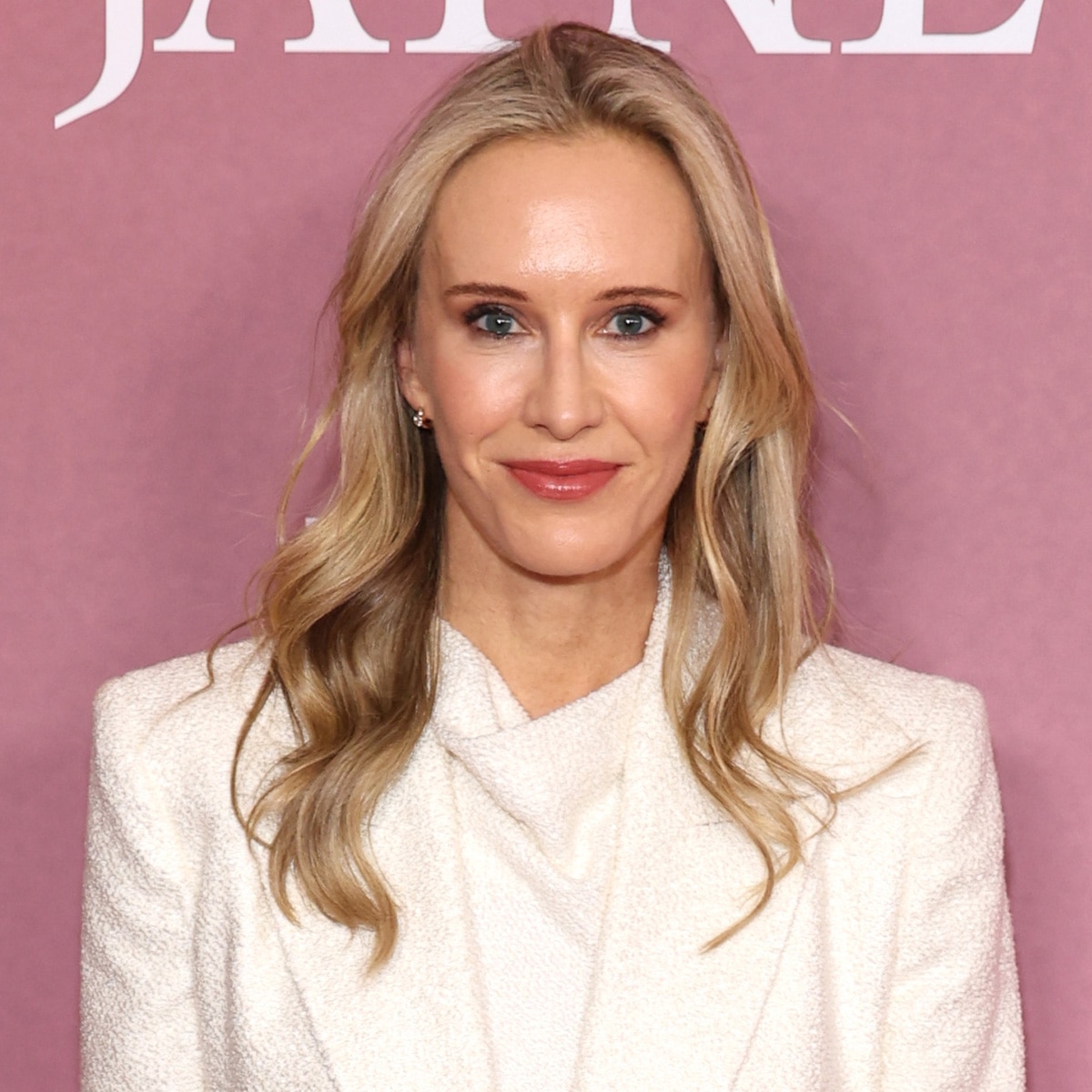
Does Amy Griffin's memoir The Tell actually tell the story of another woman's trauma?
The venture capitalist's celebrity-endorsed 2025 bestseller unspools a remarkable tale about how she used MDMA therapy to recover long-repressed memories of being sexually abused by a teacher at her Texas middle school in the 1980s.
Oprah Winfrey, Reese Witherspoon and Jenna Bush Hager celebrated Griffin last March at the launch of her book tour, an event hosted by Mariska Hargitay at New York City's Ford Foundation Building. The Law & Order: SVU star and longtime advocate for victims of sexual violence also interviewed the first-time author, writing afterward on Instagram, "How lucky we all are to hear, learn from and bear witness to her story."
In an essay last April heralding Griffin as one of TIME's 100 Most Influential People of 2025, Witherspoon recalled her friend coming to her with the story that's "at the heart of her striking memoir."
"I watched as she bravely reached into the deepest parts of herself," the Oscar winner wrote, "and, after gaining access to repressed memories of abuse she faced as a child, embarked on an incredible journey of discovery, grief, and healing."
Excerpted in Vogue and anointed by the holy triad of book sale boosters—"It's so powerful," Oprah told the audience, "that never before have I been anywhere where Reese Witherspoon's book club and Jenna's book club and my book club are all in the same room!"—The Tell sold more than 100,000 copies and spent four weeks on the New York Times' hard-copy nonfiction best seller list.
But, that rapturous reception was soon followed by scrutiny, as readers started to question aspects of Griffin's abuse story.
In The Tell, Griffin chronicles growing up in Amarillo, Texas, finding solace in running, moving to New York, marrying, having four kids and starting her company G9 Ventures.
But, as she detailed in the book, she had a persistent feeling that she was trying to outrun something, writing in the prologue, "I ran because I was afraid of what I would feel if I sat still."
When her 10-year-old daughter told her one night, "Mom, I don't know how to say this, but I feel like I don't know you…You're nice, but you're not real," Griffin was admittedly at a loss of what to do next.
According to the book, Griffin's recollections of being abused remained inaccessible until she began MDMA-assisted therapy and started investigating her own childhood.
“I knew that these memories were real,” she wrote. “My body knew what had happened to me. The way I’d shake when I’d tell my story; the way my eyes welled up with tears at the mention of Texas."
The practice of recovering traumatic memories remains an inexact science.
"People can go for years, even decades, without encountering what for them are the right combinations of context and cues to elicit recall,” clinical psychologist Jim Hopper told USA Today, commenting on The Tell and subsequent controversy.
“Some ideas and beliefs could potentially lead [Griffin] to recall something that didn't happen," Hopper said, "but it also could be based in reality that something did happen to her, and she finally felt safe to allow herself to be open to what it might be.”
"Whether it’s real or not—meaning whether the incident actually happened—from a therapeutic perspective, it doesn’t matter,” Multidisciplinary Association for Psychedelic Studies founder Rick Doblin told the New York Times in September. “A lot of times people will develop stories that help them make sense of their life.”
He said MDMA-retrieved memories are often "symbolic," noting, "The therapeutic setting, what Amy went through, whether it’s true or not, it has value because the emotion is real."
Meanwhile, a former classmate of Griffin's told the NY Times last year that she had been attacked in some of the locations the author said her abuse took place, and by a different teacher than the one Griffin accused, using a pseudonym. (Amarillo law enforcement and state education officials told the paper that no other complaints were raised against the since-retired teacher during his 30 years working in the district or following the release of The Tell.)
On March 4, that classmate, identified in court documents as Jane Doe, filed a lawsuit against Griffin for invasion of privacy, negligence and infliction of emotional distress, alleging that Griffin's accounts of being sexually assaulted at a middle school dance and in a school bathroom actually happened to the plaintiff.
Griffin's attorney Thomas A. Clare said in a statement to E! News that the New York Times "manufactured a false narrative" about his client and her book, as well as "engineered the premise for this absurd lawsuit."
"After two New York Times reporters instigated this whole situation by bringing the book to her attention," Clare continued, "the Plaintiff made her own choice to publicize her narrative to a global audience by acting as the principal source for (and being photographed in) a New York Times article. For its part, the Times took full advantage, publicizing this inaccurate narrative despite receiving many red-flag warnings. We look forward to exposing these meritless claims in court, as well as the deeply flawed New York Times reporting that is at the center of it.”
A NY Times spokeswoman told the Associated Press, "We’re confident in the accuracy of our reporting.”
Clare previously told the Times in September that the "mere sending" of a list of questions for fact-checking purposes "has caused additional trauma and extreme physical and emotional harm to a survivor of sexual assault, which is inexcusable.”
The Times, he said, had been "duped by a fabulist," that telling a story about abuse was "not proof or corroboration.”
Griffin's editor at Penguin Random House imprint The Dial Press told the Times, “Book publishers are not investigators. This is Amy’s story. We trust her, and all of our authors, that they are recounting their memories truthfully.”
Jane Doe's lawsuit alleges, per the Times and AP, that when she was assaulted at an eighth-grade dance, she was wearing a dress she borrowed from Griffin, and it was stained from the attack when she returned it.
In The Tell, Griffin wrote of loaning a classmate—identified by the pseudonym Claudia—a dress for a cotillion dance. After she started MDMA therapy, Griffin felt the urge to reconnect with "Claudia," according to the book, and when they met up she asked if Claudia had also been abused by the teacher Griffin accused of assault, and Claudia said no.
Clare told the NY Times that the classmate they interviewed was not the character referred to as Claudia in the book.
In the lawsuit, per the Times, Jane Doe says that she discussed growing up in Amarillo over coffee with Griffin in 2019, then in 2022 was contacted by a producer who claimed to be interested in making a film or TV show utilizing her "life story."
The plaintiff revealed her middle school abuse and then the producer cut off contact, according to the suit.
"Our client has experienced significant harm from the disclosure of deeply private information without consent," Jane Doe's attorney Zachary Rosenblatt said in a statement to E!. "We are confident we have strong legal grounds for relief under well-established privacy law. We are committed to pursuing all available legal remedies and look forward to presenting our case in court."
In her author's note for The Tell, Griffin wrote that the book "incorporates material from my journals, detailed accounts of conversations with family and dear friends, and notes from visits with doctors and other practitioners, as well as scenes reconstructed from memory."
In the wake of the controversy, Griffin—who has not publicly commented on the allegations about her book—hasn't been shirking the public eye. Her most recent Instagram post is from March 23, a photo of her and Witherspoon in honor of the actress' 50th birthday.
"Best night ever with YOU !!!," the Reese's Book Club founder wrote in the comments, "and there have been sooo many."